
More needs to be done to increase the representation of people from working class backgrounds in lay and ordained leadership roles in the Church of England, the General Synod has heard.
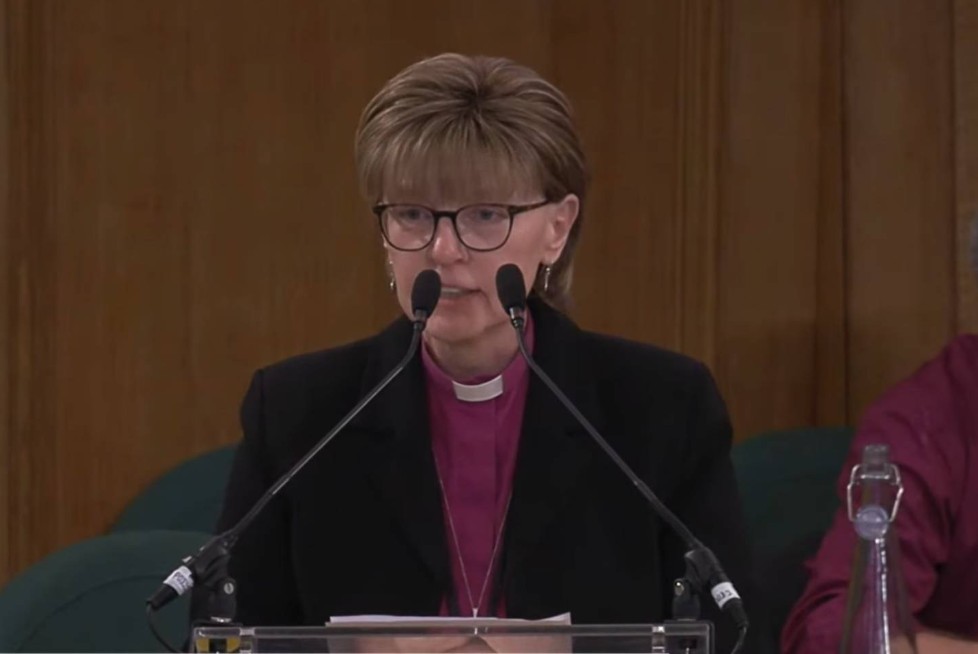
The Bishop of Barking, Lynne Cullens, who is heading a key advisory group drawing up a strategy to encourage working class vocations, spoke of progress but said research showed that there was still a ‘long way to go.”
She was addressing the General Synod one year on after members backed a call for the strategy to be drawn up following a debate led by Father Alex Frost, a Vicar in Burnley, in the Diocese of Blackburn.
“We continue to receive feedback from those who are in discernment, training and ministry that barriers not faced by their middle class peers exist – cultural, financial, attitudinal and academic,” Bishop Lynne said.
“There was a poverty of both expectation and opportunity which prohibits and restricts vocational journeys of many.”
The Bishop of Chester, Mark Tanner, who Chairs the Ministry Development Board, said a consultation exercise across the country had revealed the ‘cultural disconnect’ experienced by people from working class roots.
“There are frustrations – let’s be real Synod – our practices are often opaque, and that is deeply, deeply frustrating and alienating to many, even many of those who have served among us for years,” he said.
“We heard those frustrations around vocations, discernment, training, finances, housing, and leadership progression, above all around a kind of cultural disconnect, where you are invited to be part of something, but you never fully feel that you belong, always that you have to kind of hide a bit of yourself. Indeed, the word frustration might be an understatement.
“But at the same time, we heard hope – genuine hope, cautious, sometimes fragile, but a kind of real optimism.”
He said the new discernment framework is bringing change and is more accessible for working class people.
Ordinands whose previous educational experience might have been less than positive have spoken of excellent support, he said.
“These are important but still all too small steps. There is more that we can and we must do, not least in our most under resourced communities,” he said.
The Archbishop of Canterbury, Sarah Mullally, welcomed the work to encourage working class vocations. She highlighted shift workers, saying that 27 per cent of the UK work force regularly work evenings and nights – and they will include many potential lay and ordained ministers.
“Our current processes exclude shift workers, and we need to do more to ensure that our vocational processes are accessible to those outside traditional working patterns. Their experience brings gifts to the church that we urgently need,” she said.
Father Alex, a former Argos store manager, told the Synod that hundreds of people had contacted him following last year’s debate.
“I personally heard from hundreds of people in the Church, from so many people with a story to tell, people testifying that God is in every place, in every setting and in every person,” he said.
Here is the wording of the motion approved by the General Synod
Working class vocation and ministry next steps
‘That this Synod:
a) note the unanimous support given by this Synod in February 2025 to the Private Member’s Motion brought by the Revd Alex Frost calling for a national strategy for working-class vocations and ministry, and recognise that Synod has already agreed to “Commit itself to taking the necessary steps to raise up a new generation of lay and ordained leaders from estates and working-class backgrounds at all levels in the church” when agreeing to GS 2345 (point 5 in the motion).
b) welcome the consultation work that heard from working-class ministers, both lay and ordained, across the Church of England, acknowledging their voice and that the Church can and must do better to receive their ministry, both now and in the future.
c) call on the House of Bishops to address structural and cultural barriers to the flourishing of working-class ministers and their ministry at all levels, acknowledging the intersections with other underrepresented groups.
d) encourage the national church, dioceses and training institutions to fully adopt the use of the recognised socio-economic background (SEB) data questions as an aid to monitoring progress on class representation.
e) endorse ongoing engagement with working-class ministers and other stakeholders for continuing the strategy development and the creation of a new advisory group to oversee this, reporting to the Ministry Development Board (MDB).
Testimonies on working class vocations can be watched here.
0 Comments