June – Christina Rossetti: A Birthday

Like her brother, the painter Dante Gabriel, Christina was fascinated by medieval tales and imagery. But while it is tempting on a superficial reading to see this work as a straightforward love poem (albeit with rather fanciful language), there is another way to look at it.

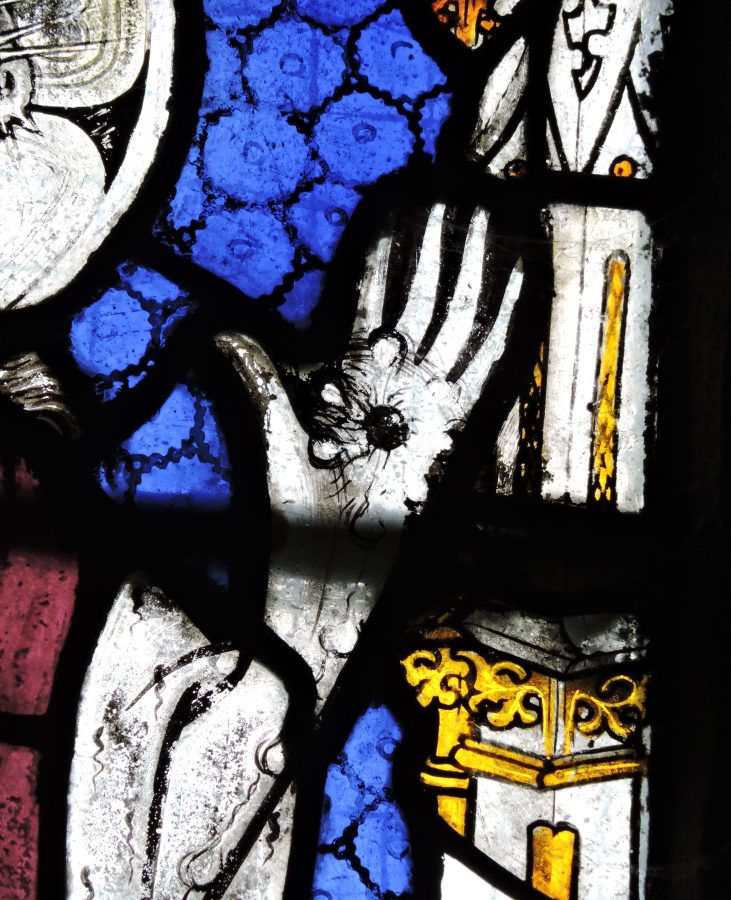
Christina Rossetti was a woman of great faith, which combines with her love of the middle ages here. The poem recalls the mysterious language of the Corpus Christi Carol where Christ is portrayed as a wounded knight on a bed with rich hangings. Colour is important in both poems. And it is Christ who leads us in calm places of refreshment, who makes us fruitful, who brings us peace. It is in Christ that we are born again. The moment when we first become fully aware of Christ’s presence can indeed be described as the Birthday of our life.


My heart is like a singing bird
                  Whose nest is in a water’d shoot;
My heart is like an apple-tree
                  Whose boughs are bent with thickset fruit;
My heart is like a rainbow shell
                  That paddles in a halcyon sea;
My heart is gladder than all these
                  Because my love is come to me.

Raise me a dais of silk and down;
                  Hang it with vair and purple dyes;
Carve it in doves and pomegranates,
                  And peacocks with a hundred eyes;
Work it in gold and silver grapes,
                  In leaves and silver fleurs-de-lys;
Because the birthday of my life
                  Is come, my love is come to me.
 

William Blake: ‘London’

Blake’s best known poem, ‘Jerusalem’, set to music by Sir Hubert Parry (a favourite
composer of the king) has been sung at many services over the coronation weekend. But
while that poem imagines the Kingdom of Heaven as an ideal for our nation, ‘London’
describes a place where God seems all too absent.

The wretched inhabitants of Blake’s London are slaves to gruelling work, to misery and to
fear. Today, we may no longer send children up chimneys, but poverty, social deprivation,
ill health and homelessness are real and growing evils. While some of us enjoy a relatively
luxurious life, others have to choose between keeping warm and going hungry despite
working long, joyless hours. While Blake’s poem tells us that social inequalities are nothing
new, it also reminds us that these are wrongs that need to be tackled. As people of faith,
who pray every day for the coming of the Kingdom, we cannot ignore them.


I wander through each chartered street,
wwNear where the chartered Thames does flow.
And mark in every face I meet
wwMarks of weakness, marks of woe.

In every cry of every Man,
wwIn every Infant’s cry of fear,
In every voice: in every ban,
wwThe mind-forged manacles I hear;

How the Chimney-sweeper’s cry
wwEvery blackening Church appals,
And the hapless Soldier’s sigh
wwRuns in blood down Palace walls.

But most through midnight streets I hear
wwHow the youthful Harlot’s curse
Blasts the new-born Infant’s tear,
wwAnd blights with plagues the Marriage hearse.


CMD and lifelong learning

The Central Readers Council is committed to supporting ongoing development and lifelong learning for Readers/LLMs. With this in mind, a number of learning packages are being developed.

We are delighted that the first of these, a module on Funeral Ministry which has been written by Alan Stanley, is available now.

This module is free of charge for a limited period – download it here.

Essential information required for your profile. Click okay to complete.