Parenting Teens for a Life of Faith

Parenting Teens
for a Life of Faith

Author Rachel Turner
Publisher BRF £9.99
Format pbk
ISBN 9781800391635

There could scarcely be a more important topic for today’s world. This book is written not just for Christian parents with teenage or approaching-teenage children, but for others involved in support of parenthood, too – grandparents, aunts, uncles, teachers and youth leaders. As a grandparent of teens, a life of faith for them is very important to me, so I read this book expectantly. The book suggests an excellent framework for parenting, but it is not a guidebook for navigating issues. It addresses listening, availability, empathy, friendship, church involvement and is strong on prayer; but it doesn’t address bullying, social media, drugs, sexual identity or behaviour. There are lots of stories of parenting – both good and bad – and these kept me engaged, though some of the imagined conversations felt a bit contrived. There’s a lot to get right, and Rachel Turner covers a lot of ground.

Twenty-first century teenagers need good parenting and good support. This book will encourage those who seek to provide it. I recommend it.

Reviewed by HOWARD ROWE

Christian family life


Followers of the Way

Followers of the Way

Author Simon Reed
Publisher BRF £9.99
Format pbk
ISBN 9781800391628

In our journey as followers of Jesus Christ, do we know how to integrate and sustain discipleship in all areas of our life? Reed, a Guardian of the Community of Aidan and Hilda, answers by showing us a ‘way of life’ inspired by the ancient wisdom and practice of Celtic Christianity. Like following a map, we need help and direction to know where we are going. In each chapter he explains and discusses different practices to enable us to ‘set out on a lifelong journey to connect more deeply with God and to connect God with the whole of life.’ I particularly liked the chapters on healing and prayer. Thus, by following this way of life, ‘we must become better people, living better lives in a better world.’ What more could we wish to achieve? The book is warmly and personally written, particularly relevant today as we have so few answers to the many seemingly insurmountable problems in our lives. There is a great need to bring healing and wholeness to the whole of creation. I thoroughly recommend this enjoyable book.

Reviewed by JANE SLINGER

Celtic spirituality


Living God’s Future Now

Living God’s Future Now

Author Samuel Wells (ed.)
Publisher Canterbury £17.99
Format pbk
ISBN 9781786224156

Subtitled ‘Conversations with contemporary prophets’, this book is, in my view, one of the best things to have been created during the pandemic. With contributions from twenty well-respected twenty-first century Christian thinkers, activists, and preachers, the seventeen chapters give huge opportunities for spiritual growth. The writers encourage us to face the challenges of modern life and they also offer wisdom on many subjects that thoughtful Christians are always interested in: Freedom, Friendship, Dignity, Speech, Redescription, Imagination, Justice, Hope, Community, Evolution, Materiality, Creativity, Faithfulness, Mercy, Identity, Perception, and Transformation. The narrative is full of wisdom and surprises. Sometimes it will put into exactly the right words something the reader knows already. Sometimes it calls out to the reader to stop, think deeply, challenge. Sometimes it inspires us to imagine, to hope, to change the things that need changing. Living God’s Faith Now is recommended for anyone who loves to explore the nature of God and how he works in the world.

Reviewed by VERONICA BRIGHT

Contemporary theology


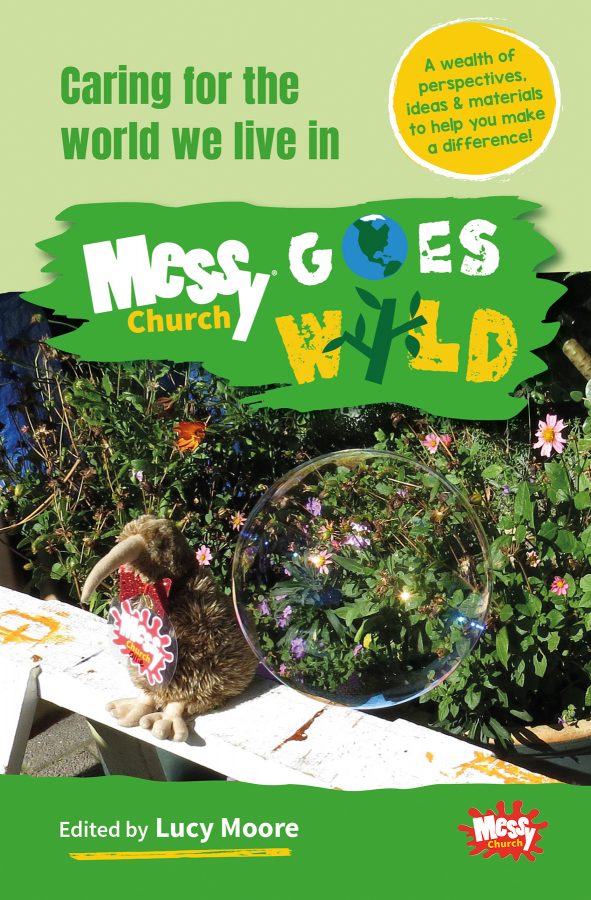
Messy Church Goes Wild

Messy Church Goes Wild

Author Lucy Moore
Publisher BRF £12.99
Format pbk
ISBN 9781800390096

‘Messy’ conjures up many images. This book takes its lead, not from a slipshod approach or a ‘what’s left after a session with children and creativity’ point of view, but from humility which emerges when we recognise the messiness of our lives. The five core values of Messy Church are: Christ-centred, all-age, hospitality, creativity and celebration. They encourage us to look at what happens when, as messy people, we allow ourselves to ‘go wild’, to interact with our complex world unfettered by preconception, when we come as children ourselves. This truly accessible book is peppered with ideas, scriptural references and thought-provoking ideas from dedicated and passionate experts, as well as case studies from around the world and two fully worked up sessions. We know from our time during the pandemic the importance of noticing the beauty of creation, of being in nature. This book is a gift for those who wish to develop that idea into spiritual acts of worship which will draw in the local community and invigorate their congregations. I am really looking forward to putting these ideas into practice.

Reviewed by JOANNA HAYWOOD

Messy Church


Being With

Being With
(Leaders’ Guide)

Author Samuel Wells
Publisher Canterbury £12.99
Format pbk
ISBN 9781786 224394


Being With
(Participants’ Companion)

Author Sally Hitchener
Publisher Canterbury £6.99
Format pbk
ISBN 9781786 224422


This ten-session course can be run on-line or in person. Each ninety-minute session is led by a leader and a storyteller with a standard structure of Welcome (giving participants the opportunity to reflect on their week), Wonderings (using the Godly Play approach developed by Jerome Berryman to enable everyone to enter the conversation at their own level and to be heard), the Talk (5-10 minutes to address the main theme of the session) and Reflection (discussion about the Talk). The leaders’ guide contains the instructions for running the course, the content, commentaries on the talks (for leaders less confident or looking for more background material) and the method for inviting people to take part or to become part of the leadership of the course. There are many examples in the leaders’ guide of how people responded when the course was being trialled and these give insights to its possibilities. As with Alpha, the work of the Holy Spirit is recognised as part of the course. Indeed the point is made that the Holy Spirit is as active in the life of a non-believer, someone of a different faith or the hostile, as in the believer. The material rejects any suggestion of a ‘deficit model.’ Seekers or lapsed believers are not empty vessels to be filled or corrected by the leaders. Rather it adopts an ‘asset model’ because Jesus became what we are. This is summarised in the sentence ‘Grace doesn’t eradicate nature, but perfects.’ Again, this echoes the Godly Play methodology. The participants’ companion is for those who are comfortable with books. There are no pictures and the reading age is slightly above the national average. The course could be run without the accompanying booklet if it created a barrier in some contexts. Other people will find it helpful to remind them of what has been discussed and may use it to record their thoughts. Leaders of any course need to decide what is right in their own context. One advantage of this course is that there is no need for audio-visual technology so it can be run in any comfortable space or via video conferencing – a promising option.

Reviewed by RONA ORME

Exploring Christian Faith


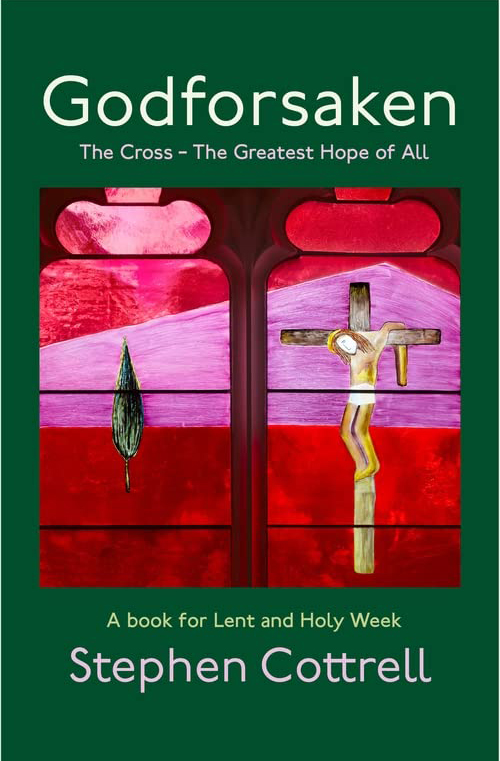
Godforsaken

Godforsaken

Author Stephen Cottrell
Publisher Hodder & Stoughton £14.99
Format hbk
ISBN 9781399805247

Subtitled ‘The Cross – The Greatest Hope of All’, the author, the present Archbishop of York, offers a series of reflections seeking ‘to reveal the deepest truth about God’s passionate involvement with the world he loves…’ He begins by quoting Jürgen Moltmann: ‘In the midst of the unbearable story of the passion of the world, we can discover the reconciling story of the passion of Christ.’ Across seven chapters drawing specifically on Mark’s Gospel, each ending with a set of questions, the author seeks to reveal that deepest truth.

Chapter One ‘It is wise to remember that Jesus didn’t speak English’ challenges the reader as to how we translate into the cultures and languages of today, the story, beliefs and values that we see and receive in Jesus Christ? The author notes correctly and sadly the potential for nuance and meaning being lost literally in Bible translations down through the years.

Chapter Two ‘My God, my God, why have you forsaken me?’ is the opening line of Psalm 22. The author challenges the reader to learn a Psalm (perhaps not starting with 119 though…) by heart as a way of beginning to restore ‘the spiritual and liturgical disciplines that were so much a part of the Christian formation of our forebears have fallen into disuse’. Bonhoeffer is quoted: ‘A Christian community without the Psalter has lost an incomparable treasure and by taking it back into use will recover resources it never dreamed it had.’

Chapter Three ‘Because Jesus’ terrible cry of dereliction is the opening line of Psalm 22 it leads us into this psalm in its entirety and helps us understand what the cross means.’ The author reminds us that this particular Psalm was sung (to the tune of The Deer of the Dawn) and that Jesus would have remembered singing it. The cross is real. It is horribly real. It is real horror and real pain… Yet in the midst of our own real pains when we worship, we are taken into something bigger than ourselves. For at worship’s heart, I believe, we find Jesus. William Temple is quoted: “To worship is to quicken the conscience by the holiness of God, to feed the mind with the truth of God, to purge the imagination by the beauty of God, to open the heart to the love of God, to devote the will to the purpose of God.”

Chapter Four ‘When Jesus cried out ‘Eloi, Eloi, lema sabachthani’ the people standing at the foot of the cross misunderstood him.’ The author reminds the reader that the one who has such a heart of love and was so moved with pity for those who were forsaken will himself become forsaken, unrecognised, unheard and misunderstood: he will, upon the cross, become the one who is abandoned. The author further reminds of the importance of understanding and receiving this as believers.

Chapter Five ‘The words that Jesus cries out as he dies are terrifying: My God, my God why have you forsaken me?’ The author challenges the reader to consider that ‘no amount of clever explaining away eliminates or reduces the stupefying horror that maybe, just maybe, in those final agonising moments Jesus himself stopped believing in God, stopped reckoning himself the Messiah, was utterly defeated and abandoned. Isn’t this what the words actually mean? Or is it? Is there something else?’ As one who is all for Archbishops and Bishops speaking out to the world around us, I equally appreciate them speaking out to the church and making us, the church, think and pray.

Chapter Six ‘As Jesus dies on the cross, Mark tells us there was darkness over the land (Mark 15.33).’ The author challenges us to meditate and wrestle with the thought that ‘God is forsaken by God… There is, if we can even begin to imagine such a thing, a kind of breakdown in the very life of the Trinity… We know that being human means being frail and mortal. We suffer. We die. God now knows that too.’ The book is worth it for this chapter alone.

Finally, Chapter Seven ‘Jesus’ howl of anguish from the cross is the cry of the human soul in all its suffering and the sign that our humanity in all its joy and sadness is taken into the life of God in the Trinity.’ The author challenges us to stand under the cross to understand it, recognises that understanding will always be elusive, yet knows that Jesus has created for us on and through the cross a relationship with God and that relationships only work when we enter into them.

I highly recommend this profound book to all and not just for reading during Lent and Holy Week. In my opinion, it does indeed reveal the deepest truth about God’s passionate involvement with the world He loves.

Reviewed by ANDREW CARR


Lent and Holy Week

 

Essential information required for your profile. Click okay to complete.